The Art of Fiberglass & Polyethylene, Engineered with Innovation and Precision for Lasting Performance.

FRP Lamination FRP Lining



Page updated: October 2026
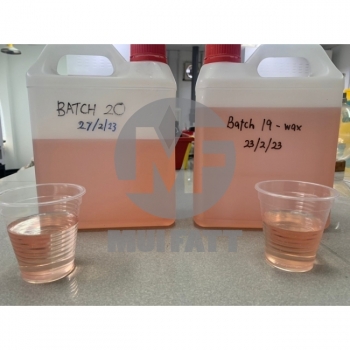
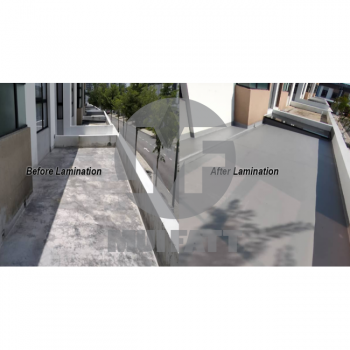
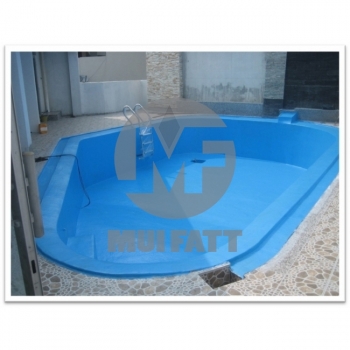
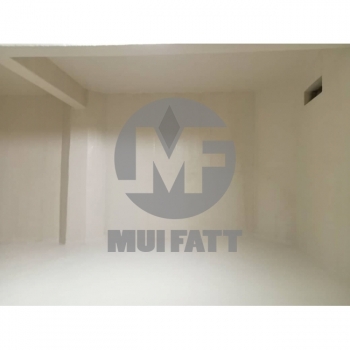
Mui Fatt Marketing Sdn Bhd provides FRP lamination (FRP lining) in Malaysia, carried out by its subsidiary Y.T. Fibreglass Industries Sdn Bhd in Port Klang. FRP lamination is a hand-laid lining of resin primer, plies of 450 g/m² E-glass chopped strand mat, a surface veil and a waxed resin topcoat, bonded to concrete, mild steel or stainless steel. It protects tanks, pits, trenches, bund walls, steel structures, agitator shafts, swimming pools, fish ponds and roofs from chemicals, corrosion and leaks, and protects coastal and offshore metal structures from sea air and salt water. The resin is matched to the job: general purpose polyester (GP) for waterproofing, isophthalic polyester (ISO) or vinyl ester (VE) for chemical service. Work is done on site or at our factory.
FRP stands for fibreglass reinforced plastic. FRP and GRP (glass reinforced plastic) are two names for the same material, and the lining is also called fiberglass lamination, fiberglass lining or FRP coating. In Malay it is often searched as lapisan fiberglass salutan FRP or kalis air fiberglass.
Key Features and Benefits
Wide Chemical Resistance
With the right resin, the lining resists continuous immersion in, or spillage of, acids, solvents, bleaches, mild alkali solutions, crude oil and fuel oil. Vinyl ester linings resist strong inorganic acids such as hydrochloric acid and sulfuric acid.
One Seamless Layer
The glass mat plies overlap and are wetted out in one continuous lining, so there are no joints for liquid to creep behind.
Works on Concrete and Steel
The same lining system bonds to concrete, mild steel and stainless steel. Typical adhesion is above 580 psi on grit-blasted steel and above 290 psi on sweep-blasted concrete.
Tough and Flexible
Glass mat reinforcement gives the lining good elongation and toughness, so it copes better with small movements and knocks than a thin paint coat.
Resin Matched to Your Chemical
We check your chemical, its strength and its temperature against the resin maker's chemical resistance chart before we quote.
On Site or at Our Factory
Tanks, pits, pools and roofs are lined where they stand. Shafts, impellers and steel parts can be sent to our factory in Port Klang.
FRP Lining Specifications
| Specification | Details |
|---|---|
| Lining build-up | 1 coat of resin primer; plies of E-glass chopped strand mat (CSM); 1 ply of surface veil (tissue); 1 coat of waxed (paraffinated) resin topcoat |
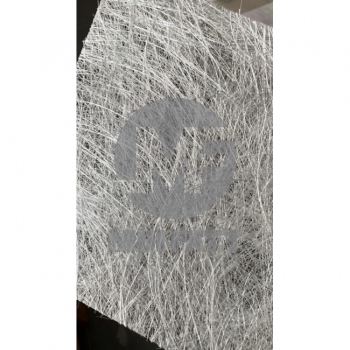
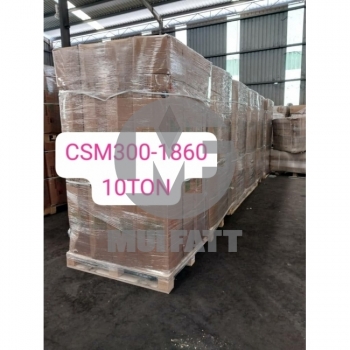
| Glass mat | 450 g/m² chopped strand mat (CSM) |
| Number of plies | Minimum 1 ply recommended; usually up to 3 plies. Chemical tank linings use 2 to 5 plies to suit the chemical. |
| Lining thickness | About 1 mm per ply of 450 g/m² mat, so usually about 1 mm to 3 mm |
| Resins | General purpose polyester (GP), isophthalic polyester (ISO), vinyl ester (VE) |
| Substrates | Concrete, mild steel, stainless steel |
| Tensile strength | 9,000 psi (typical) |
| Tensile modulus | 1,000,000 psi (typical) |
| Barcol hardness | Above 30 |
| Adhesion | Above 580 psi on grit-blasted steel; above 290 psi on sweep-blasted concrete |
| Colour | Natural resin colour (clear) or grey |
| Inspection | Visual inspection; ply count during lamination |
| Work site | On site, or send the item to our factory in Port Klang |
Properties are typical values for the laminate, not a guarantee for every job.
What We Laminate
| Item | Why it is laminated | Usual resin |
|---|---|---|
| Mild steel and stainless steel tanks → | Keeps the stored chemical off the steel | ISO or VE (GP for some chemicals) |
| Concrete wastewater tanks → | Stops wastewater attacking and leaking through concrete | ISO or VE |
| Trenches, pits and bund walls | Protects concrete from chemical spillage | ISO or VE |
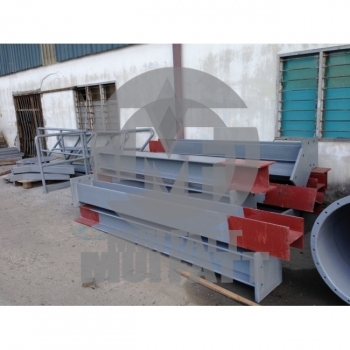
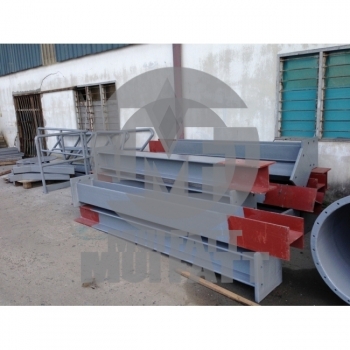
| Steel structures, handrails and I-beams → | Corrosion protection in chemical and fertilizer plants | ISO or VE |
| Agitator shafts and impellers → | Protection from the liquid being mixed | GP or VE |
| Coastal and offshore metal structures | Protective coating against sea air and salt water | ISO or VE |
| Chemical road tankers and oil tank bottom plates | Corrosion and leak protection | ISO or VE |
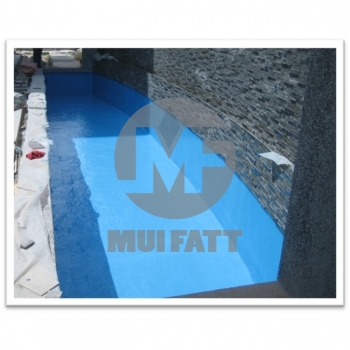
| Swimming pools → and fish ponds → | Waterproofing | GP |
| House roofs → and floors | Waterproofing | GP |
For general enquiries see our FRP Lamination (FRP Lining) Service → page.
Resin Selection Guide
| Resin | Best for | Typical jobs |
|---|---|---|
| General purpose polyester (GP, orthophthalic) | Water and waterproofing; some mild chemicals | Swimming pools, fish ponds, floors, roofs |
| Isophthalic polyester (ISO) | Better chemical resistance than GP | Chemical tanks, wastewater concrete tanks, bund walls |
| Vinyl ester (VE) | Strong acids and alkalis, and higher temperatures | Hydrochloric or sulfuric acid service, agitator shafts in acid |
Example: for hydrochloric acid at about 20%, we use vinyl ester with a polyester surface veil and a vinyl ester corrosion-resistant layer. The resin maker's chart rates this up to about 93°C (200°F). It gives no rating for GP resin at that duty, so we do not offer GP for it.
Tell us the chemical, its concentration and its working temperature, and we will recommend the resin.
How We Apply FRP Lining
- Site visit: our technical staff check the tank or area, and access for workers, before work starts.
- Surface preparation: concrete is blasted to remove laitance and loose material; steel is ground to remove rust; dust and spent abrasive are vacuumed off.
- Priming: one coat of resin primer by brush or roller, left about 1 to 2 hours until tacky.
- Levelling: small holes and unevenness are filled with FRP putty. Large concrete defects must be repaired by the owner first.
- Lamination: catalysed resin is rolled on, a ply of glass mat is laid into it, wetted through and rolled to remove trapped air. This is repeated for each ply (at least 1, usually up to 3, and 2 to 5 for chemical tanks), then the surface veil is laid and wetted out. The laminate is touch dry in about 3 to 4 hours.
- Topcoat: a resin-rich waxed topcoat is brushed on and left to cure, about 12 hours recommended.
- Inspection: the lining is checked for blisters, cracks, trapped air and irregularities, and any defect is repaired.
Site Conditions We Need
- New concrete: cured for about 28 days before lining.
- Dry substrate: any groundwater leaking into a tank must be stopped first, and any patch must hold through the lining work.
- Weather: ambient and surface temperature 10°C to 50°C, relative humidity below 90%, surface at least 3 K above dew point, and no work in rain. We record these readings twice a day.
- Safety: no welding or metal cutting near or above the lining area, and a fire extinguisher on standby where resin is stored and mixed.
- Access: the tank or equipment must be safely accessible for our workers.
FRP Lamination for Agitator Shafts and Impellers
Mild steel agitator shafts and impellers are laminated at our factory with CSM plies in natural colour. There are three ways to build it:
| Option | How it is laminated | Maintenance |
|---|---|---|
| Welded impeller | Shaft and impeller laminated as one piece | One sealed piece |
| Bolted impeller, bolts left open | Shaft and impeller laminated; the bolted joint left bare | Can be taken apart; the joint can be laminated later |
| Bolted impeller, laminated over the bolts | Shaft, impeller and bolts fully laminated | Sealed joint, not removable |
For a quote, send the shaft length and diameter, impeller diameter, welded or bolted, the chemical and its strength, and the working temperature. See FRP Lamination for Agitator Shafts, Impellers and Equipment →
Inspection and Quality Control
- Visual inspection: every lining is checked for blisters, cracks, trapped air and irregularities.
- Ply count: the number of glass mat plies is counted as they are laid. You are welcome to witness the work.
- Why no thickness test: magnetic dry film thickness gauges cannot measure FRP lining on steel. Because the lining is built ply by ply, the ply count is the reliable check, and thickness varies by no more than about 10%.
Mui Fatt Marketing Sdn Bhd and Y.T. Fibreglass Industries Sdn Bhd run a company quality management system certified to ISO 9001:2015. Certificate copies are available on request from our certificate page →
FRP Lamination vs Paint or Epoxy Coating
| Point | FRP lamination | Paint or epoxy coating |
|---|---|---|
| Build | Glass mat reinforced, several plies | Unreinforced film |
| Thickness | Millimetres | Usually a fraction of a millimetre |
| Bridges small cracks | Yes, the glass mat spans them | Poorly |
| Chemical immersion | Yes, with ISO or VE resin | Depends on the product |
| Cost and time | Higher; several cure stages | Lower; faster to apply |
Choose FRP lamination when the surface will be immersed in or splashed by chemicals, or must stay watertight for years. A paint coat may be enough for dry, mild conditions.
Applications by Industry
- Chemical, fertilizer and agrochemical plants: mild steel tanks, handrails, I-beams and steel structures
- Coastal and offshore: protective coating for metal structures exposed to sea air and salt water
- Wastewater and sewage treatment: concrete tanks, pits and trenches; agitator shafts and impellers
- Oil and fuel storage: bottom plates of oil storage tanks; bund walls
- Transport: chemical road tankers
- Homes and buildings: swimming pools, fish ponds, floors and roofs
Care and Repair
A concrete swimming pool or pond lining needs no maintenance as long as it holds water. In chemical plants, inspect the lining regularly, especially around nozzles, joints and impeller blades. A hard knock or a pinhole lets the chemical reach the steel, and corrosion can then spread quickly under the lining. When the corrosion barrier wears off or the lining starts to peel, it is time to repair or reline.
We repair and reline old FRP linings and old FRP tanks.
What We Need for a Quote
- What is to be lined (tank, pit, pool, roof, shaft or structure) and photos
- Sizes or the area in square metres
- Concrete or steel, and its present condition
- The chemical, its concentration and its working temperature
- Site location, and whether the work is on site or at our factory
Technical Expertise and Attribution
Technical content on this page is by Danny Ng Shin Lai, Director & Lead Composite Technical Specialist, Mui Fatt Marketing Sdn Bhd, and the Mui Fatt technical team. Danny Ng studied Materials Science and Engineering at UC Berkeley and oversees composite fabrication, resin selection and FRP lining work for Mui Fatt.
Frequently Asked Questions
What is FRP lamination?
FRP lamination, or FRP lining, is a layer of glass fibre mat and resin built up by hand on concrete or steel. Once cured it forms a hard, seamless lining that resists chemicals, corrosion and water.
Is FRP lining the same as GRP lining or fiberglass lining?
Yes. FRP, GRP and fiberglass lining all mean a glass-fibre reinforced plastic lining.
What surfaces can be FRP laminated?
Concrete, mild steel and stainless steel.
How many layers does an FRP lining have?
One primer coat, at least 1 ply of 450 g/m² chopped strand mat (usually up to 3 plies), one surface veil and one waxed topcoat. Chemical tank linings use 2 to 5 plies to suit the chemical.
How thick is an FRP lining?
About 1 mm per ply of 450 g/m² mat, so usually about 1 mm to 3 mm.
Which resin should I choose?
GP for waterproofing pools, ponds, floors and roofs. ISO or vinyl ester for chemical tanks, pits and bund walls. Vinyl ester for strong acids such as hydrochloric acid, or for higher temperatures.
Can FRP lining handle hydrochloric acid?
Yes, with vinyl ester resin. For hydrochloric acid at about 20%, the resin maker rates vinyl ester with a polyester veil up to about 93°C (200°F).
Can you line a stainless steel tank?
Yes. Some chemicals still attack stainless steel, and an FRP lining keeps the chemical off the steel.
Do you do the work on site?
Yes. We line on site, or you can send the item to our factory in Port Klang. Tanks, pits, pools and roofs are usually lined on site; shafts, impellers and smaller steel parts at the factory.
How long does FRP lamination take to cure?
The primer is tacky in about 1 to 2 hours, each laminate stage is touch dry in about 3 to 4 hours, and the topcoat is left about 12 hours. The total job time depends on the area and the number of plies.
Can new concrete be lined straight away?
No. New concrete should cure for about 28 days, and any groundwater leaks must be stopped before lining.
When can a lined tank go back into service?
We recommend waiting 48 hours after the topcoat before filling.
How long does an FRP lining last?
It depends on the use. A swimming pool or pond lining needs no maintenance as long as it holds water. In chemical plants, inspect the lining and reline when the corrosion barrier wears off or the lining starts to peel.
Can FRP lining be used for drinking water tanks?
It depends on the use. For example, when a new concrete water tank needs a lamination as a backup layer, food-grade resin can be provided. Tell us the use and we will advise. For ready-made water storage, see our FRP sectional panel water tanks →
How is the lining checked?
By visual inspection for blisters, cracks and trapped air, and by counting the plies as they are laid. You are welcome to witness the work.
Can you laminate an agitator shaft with a bolted impeller?
Yes. We can leave the bolts open so the impeller can still be removed, or laminate over the bolts for a fully sealed joint. Welded impellers are laminated as one piece.
Is FRP lamination better than epoxy paint?
For chemical immersion and long-term waterproofing, yes, because it is glass reinforced and millimetres thick. For dry, mild conditions a paint coat may be enough and costs less.
Do you sell materials for small waterproofing jobs?
Yes. Fiberglass mat and waterproofing resin are listed in our FRP Lamination category →
Can FRP lamination protect metal structures by the sea or offshore?
Yes. FRP lamination can be used as a protective coating on coastal and offshore metal structures exposed to sea air and salt water.
Do you repair or reline old FRP linings and tanks?
Yes. We repair and reline old FRP linings and old FRP tanks.
Is there a warranty on FRP lamination?
There is no standard warranty, because the life of a lining depends on the chemical, the temperature and wear. We advise on the right build-up for your job before we quote.
How much does FRP lamination cost?
It depends on the area, the number of plies, the resin, the surface condition and the site. Send us photos and sizes for a quotation.
Request a Quote
Send us photos, sizes, the chemical and its temperature, and your site location. We will recommend the lining build-up and resin, and send you a quotation.
Mui Fatt Marketing Sdn Bhd
Lot 11793, Jalan Pengkalan Nelayan, Telok Gong, 42000 Port Klang, Selangor, Malaysia
Tel: +603-3134 3888
Email: sales@muifatt.com.my
Looking For Reliable Fibreglass
Or Polyethylene Products?
Talk to our team today. We’ll help you find the right solution for your business needs.
Get a Quote